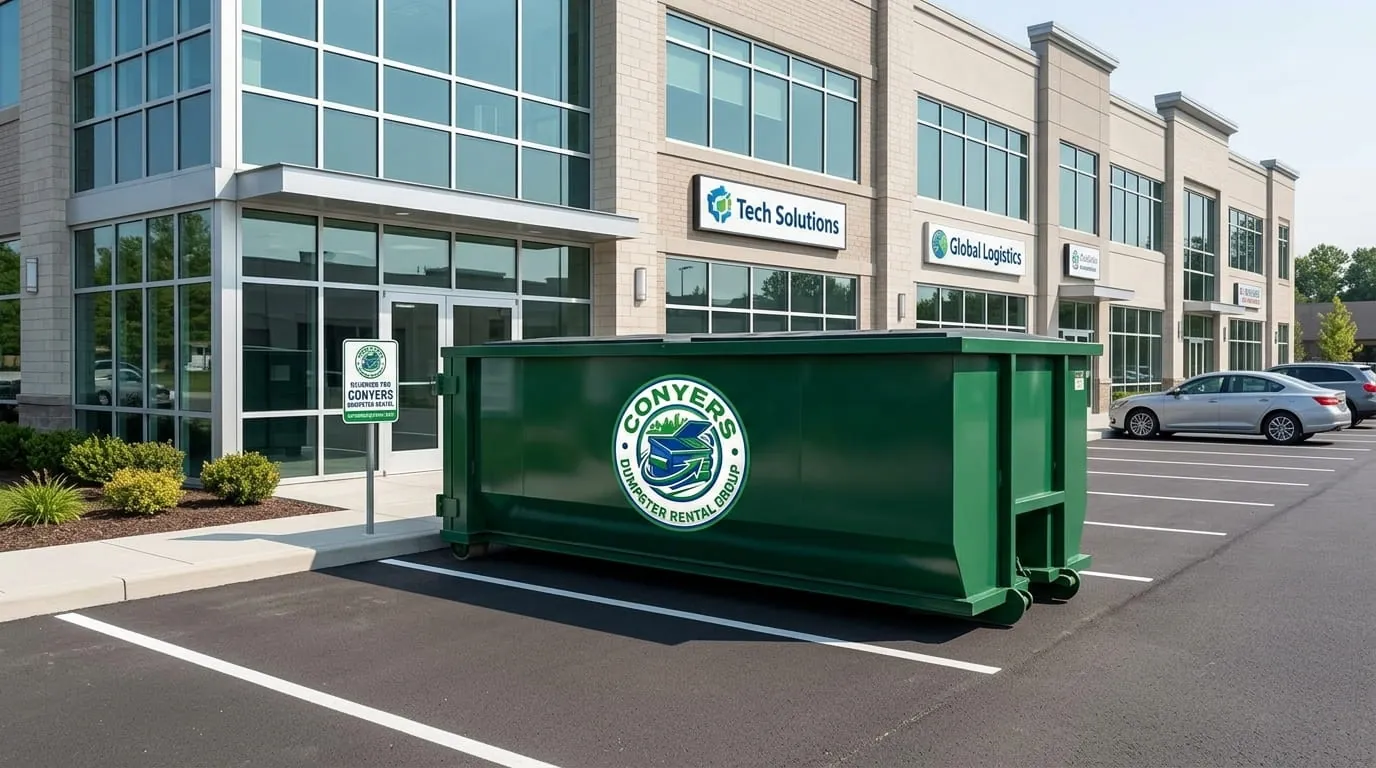
A dumpster rental is one of the fastest ways to clear out a home renovation, roofing tear-off, or garage cleanout here in Conyers. But before that roll-off container ever touches your property, there is one question worth asking: what is it going to do to your driveway? A loaded 20-yard box can weigh several tons, and it sits on four narrow steel rails or wheels that concentrate all of that weight into a handful of contact points. On the wrong surface, on the wrong day, that can leave marks, gouges, or hairline cracks you will be looking at for years.
At Conyers Dumpster Rental Group we place containers on Rockdale County driveways every week, and the good news is that driveway damage is almost always preventable. It comes down to understanding why the damage happens, protecting the contact points, and working with a hauler who treats your concrete like it is their own. Here is everything you need to know to keep your driveway looking exactly the way it did before the dumpster showed up.
Why Roll-Off Dumpsters Can Mark or Crack a Driveway
A roll-off dumpster does not sit flat on your driveway the way a piece of patio furniture does. It rides on two long steel runners underneath, and when the truck rolls it off, it pivots on the rear wheels and drags the back edge across the surface. Two things create the risk of damage:
- Point loading. The entire weight of the container plus everything you throw in it is carried by a small footprint. Empty, a roll-off might weigh 3,000 to 6,000 pounds. Full of shingles, tile, or wet debris, the combined load can push past 10,000 pounds sitting on rails only a few inches wide.
- Movement. The container slides during delivery and pickup. That dragging motion, combined with grit trapped under the steel, is what scratches and scuffs the surface. Backing a truck up the drive adds turning and braking forces on top of that.
Concrete and asphalt each fail in their own way. Concrete is strong under compression but brittle, so a heavy point load over a weak spot or an existing hairline crack can widen it or chip the surface. Asphalt is flexible and petroleum-based, which means it softens in heat and can take a permanent dent or rut where the rails press in. Knowing which surface you have changes how you protect it.
The Conyers Factor: Heat, Humidity, and Red Clay
Our local conditions make driveway protection more important here than it would be in a cooler, drier climate. A few things stack up against a Conyers driveway:
Georgia Summer Heat Softens Asphalt
On a July afternoon in Conyers, surface temperatures on a dark asphalt driveway can climb well above the air temperature, often past 130 degrees. Asphalt binder gets pliable at those temperatures. Set a multi-ton steel rail on soft asphalt and it will press in, leaving a rut or a shiny depression that never fully recovers. If you are renting in the peak of summer, an asphalt drive needs protection more than at any other time of year.
Humidity and Heavy Rain Around the Pad
Conyers summers are humid, and our afternoon thunderstorms can drop a lot of water fast. Water is the hidden enemy of a driveway under load. Rain saturates the soil at the edges of the pad and works into any existing cracks. Saturated ground under a slab loses its ability to support weight, so a container that sat fine on dry concrete can cause settling or edge cracking after a storm. If the container has to sit through several rainy days, that standing weight on softened ground is a real concern.
Red Clay Settling Under Older Drives
Rockdale County sits on Georgia red clay, which expands when wet and shrinks when dry. That constant movement is why so many older Conyers driveways already have a network of fine cracks and slabs that have shifted slightly over the years. When we place a heavy container on a drive that is already sitting on unstable clay, any weak point is where a crack will show up. Older concrete drives that were poured decades ago, often thinner than modern pours and with tired control joints, deserve extra care.
Boards and Plywood: Your First Line of Defense
The single most effective thing you can do is put a barrier between the steel and your driveway. This spreads the load out and gives the rails something to slide on other than your concrete or asphalt. What works:
- Plywood sheets. Three-quarter-inch or thicker plywood laid under where the container will rest is the standard. It distributes the point load across a wider area and takes the scuffing instead of your surface.
- Dimensional lumber. Two-by-tens or thick planks placed directly under the two steel runners work well and are easy to position where the rails land.
- Rubber mats or thick boards at contact points. The rear of the container and the wheels are where dragging happens during drop-off and pickup, so extra protection there pays off.
The trick is placement. The boards need to be under the actual rails and wheels, not just tossed on the driveway. A good hauler knows exactly where the container will land and where it pivots during unloading, which is why this is best coordinated with your delivery driver rather than guessed at.
Weight Distribution and How You Load Matters
Protecting the driveway does not stop once the container is placed. How you fill it changes the load on your surface. A few habits help:
- Spread heavy material out. Do not pile all your concrete chunks, tile, or dirt in one corner. Concentrating dense material over one rail increases the point load right there. Spread heavy debris evenly across the floor of the container.
- Right-size the container. Ordering a smaller box for a heavy load keeps the total weight manageable. For a dense job like a small bathroom demo or a concrete removal, a compact container often makes more sense than a large one. If you are unsure, our guide on what size dumpster you need walks through matching the container to the debris.
- Mind the weight limits. Overloading not only risks fees, it puts more weight on your driveway for longer. Loading to the fill line rather than heaping keeps everything within safe limits.
Concrete vs. Pavers vs. Gravel: Placement by Surface
Where and how a container should sit depends entirely on what your driveway is made of. Each surface has its own rules.
Concrete Driveways
Most Conyers driveways are poured concrete, which handles container weight well when it is in good shape and properly supported. The risks are scuffing from the rails and cracking over existing weak spots or control joints. Boards under the runners solve the scuffing. For older or already-cracked concrete, we take extra care with placement so the load does not sit directly over a compromised joint.
Pavers and Decorative Surfaces
Paver driveways and stamped or decorative concrete are the most vulnerable. Individual pavers can crack, shift, or sink into the sand base under concentrated weight, and the result is uneven, expensive to reset, and hard to hide. On pavers, full-sheet plywood or heavy boards are not optional. In many cases the smarter move is to place the container off the pavers entirely, on a street-side pad or a sturdier section of the drive.
Gravel and Unpaved Areas
Gravel is forgiving in that it will not crack, but it can rut deeply and shift under the container, and a soft or wet gravel base can let the box sink or tilt. Placing boards under the rails on gravel keeps the container level and prevents it from digging in. After a Conyers rainstorm, gravel needs a firm, level spot even more.
Backing and Loading: The Delivery Details
A lot of driveway damage happens in the first and last five minutes, during delivery and pickup, not while the container is sitting still. The truck has to back up the drive, and the container drags as it comes off and again as it is winched back on. This is where an experienced driver earns their keep. Careful backing, gentle placement, proper use of boards at the pivot points, and taking the time to set the container down rather than letting it drop all protect your surface. When you book a professional roll-off dumpster rental, this care should come standard, not as an upgrade.
What a Good Hauler Does Automatically
You should not have to become a driveway-protection expert to rent a dumpster. A professional hauler handles most of this for you. Here is what we do at Conyers Dumpster Rental Group without being asked:
- We ask about your surface type and driveway condition when you book, so we arrive prepared.
- We bring and place boards under the rails and at contact points on any surface that needs it.
- We back and set the container carefully, minimizing drag and choosing a placement that avoids cracks, joints, and soft spots.
- We watch the weather. If heavy rain is coming and the ground is already saturated, we will talk through the best placement or timing.
- We size the container to the job so you are not carrying more weight than you need. Our residential dumpster rental service is built around exactly these homeowner concerns.
For lighter or shorter jobs, a smaller container spends less time and weight on your drive. Something like a 10-yard dumpster is compact, sits on a small footprint, and is ideal for a bathroom remodel, a garage cleanout, or a small roofing job.
A Note on HOA-Maintained Driveways
Many Conyers neighborhoods are governed by an HOA, and in some communities the association maintains shared drives, aprons, or common surfaces. If your driveway or the approach to it falls under HOA rules, check whether there are placement restrictions or a requirement to protect the surface before you schedule. Documenting the driveway's condition with a few photos before delivery is always smart, and it is doubly wise when a third party is responsible for the surface. We are happy to work within any HOA guidelines you pass along to us.
The Bottom Line for Conyers Homeowners
Driveway damage from a dumpster is real, but it is also almost entirely avoidable. Put boards under the contact points, spread your heavy debris out, right-size the container, and mind the weather, and your concrete or asphalt will come through the rental untouched. Most of all, rent from a hauler who does this every day and protects your property as a matter of routine. Take a look at everything we offer on our services page, and if you have questions about your specific surface, we are glad to talk it through.
Ready to book a dumpster that will not leave a mark? Call Conyers Dumpster Rental Group at (470) 276-5696 or reach out through our contact page and we will get you set up with the right container and careful placement on your Conyers driveway.
Founder, Conyers Dumpster Rental Group — sharing straight advice from more than 15 years of local hauling experience.
Frequently Asked Questions
Will a dumpster really crack my concrete driveway?
It can, but it usually will not if the container is placed and supported correctly. Cracks tend to appear where a driveway is already weak, such as over an existing hairline crack, a tired control joint, or a section sitting on unstable red clay. Placing boards under the steel rails to spread the load, avoiding compromised joints, and keeping the container within its weight limit all but eliminate the risk. Older Conyers concrete drives deserve extra care, which is why we ask about your surface when you book.
Do I need to put plywood down myself before delivery?
You are welcome to, but you do not have to. A professional hauler brings and places boards or plywood under the rails and at the contact points as part of a careful delivery. If you want to lay your own protection, three-quarter-inch or thicker plywood or two-by-ten planks positioned where the runners land work well. Just coordinate with your driver so the boards end up in exactly the right spot, because placement matters more than quantity.
Is summer heat in Conyers a problem for my asphalt driveway?
Yes, more than most people expect. On a hot Conyers afternoon an asphalt surface can climb past 130 degrees, which softens the binder and lets heavy steel rails press in and leave a permanent rut or shiny depression. Asphalt drives need board protection more in summer than at any other time. If you are renting during the peak heat, let us know it is asphalt and we will make sure the container is set on boards that spread the weight.
Should I worry about rain while the dumpster is on my driveway?
Heavy rain matters because saturated ground under and around the pad loses its ability to support weight, which can lead to settling or edge cracking, especially over Georgia red clay. A container that sat fine on dry concrete can cause problems after several rainy days of standing load. We keep an eye on the forecast, choose a firm placement, and will talk through timing if a big storm is coming while your rental is out.
What size dumpster is safest for my driveway?
The right size is the one matched to your debris, not the biggest one available. A smaller, right-sized container carries less total weight and sits on a smaller footprint, which is gentler on your surface. For heavy, dense material like concrete or tile, a compact 10-yard dumpster is often the smart choice. If you are not sure what you need, our size guide and our team can help you pick a container that gets the job done without overloading your driveway.