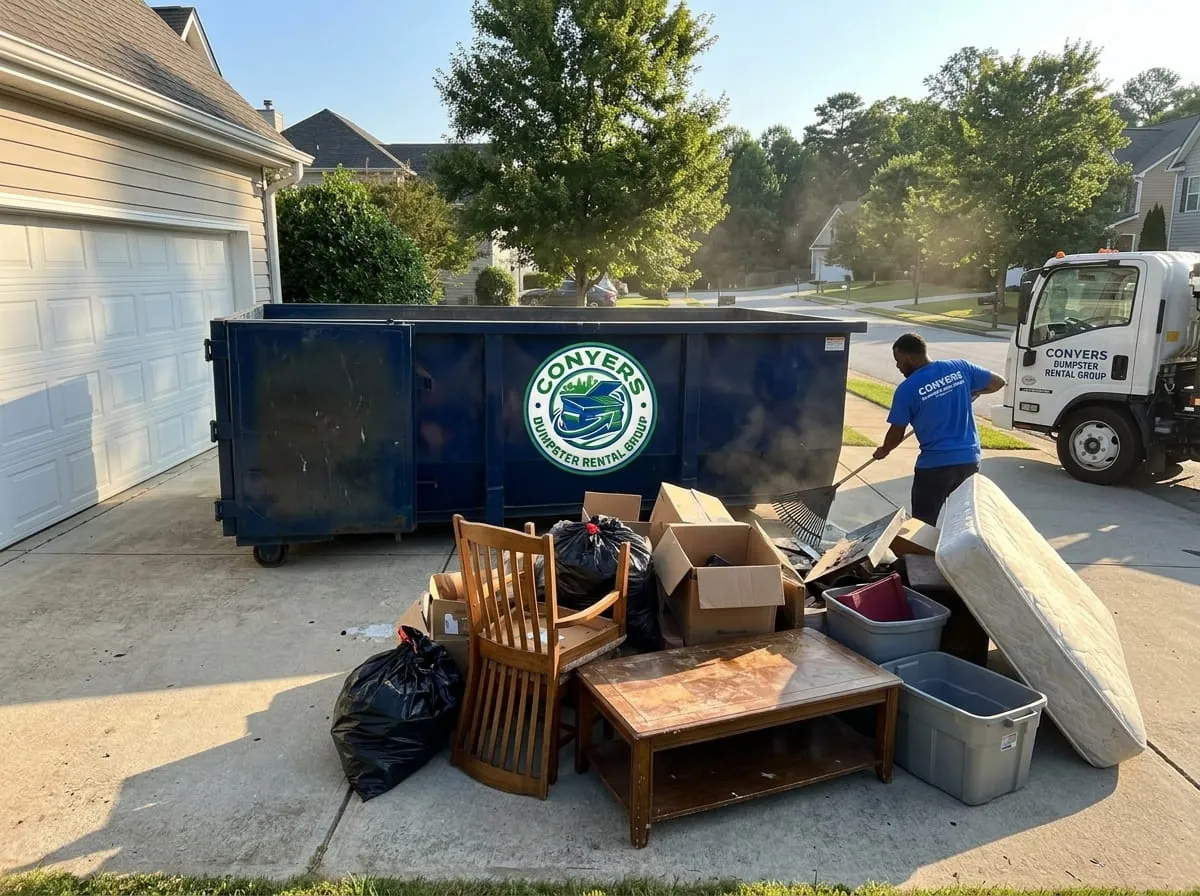
"What size dumpster do I need?" is the first question we field on nearly every call that comes into our office here in Conyers. It's the right question to ask, too. Order a bin that's too small and you're paying for a second haul or letting debris pile up in your driveway through a humid Georgia week. Order one that's too big and you've overpaid for air. After years of dropping roll-offs across Rockdale County and the eastern Atlanta metro, we've learned that picking the right size comes down to three things: the volume of what you're tossing, how heavy that material is, and the kind of job you're actually doing. Let's walk through all of it in plain language.
The Four Roll-Off Sizes We Run
Almost every residential and light-commercial job in Conyers fits into one of four roll-off dumpster sizes: 10-yard, 15-yard, 20-yard, and 30-yard. The "yard" refers to cubic yards of volume, not the length of the container. A cubic yard is roughly the amount of material that fills a standard washing machine box, or about nine to ten kitchen trash bags. Here's how the four sizes stack up in the real world.
| Size | Rough Dimensions (LxWxH) | Holds (pickup loads) | Typical Weight Limit | Best For |
|---|---|---|---|---|
| 10-yard | 12' x 8' x 3.5' | 3-4 | 2-3 tons | Heavy debris, small cleanouts |
| 15-yard | 16' x 8' x 4' | 5-6 | 2-3 tons | Mid-size remodels, roofing |
| 20-yard | 22' x 8' x 4.5' | 7-8 | 3-4 tons | Whole-room renos, large cleanouts |
| 30-yard | 22' x 8' x 6' | 10-12 | 4-5 tons | New construction, whole-home projects |
Notice that the footprint of a 20-yard and a 30-yard is often the same length and width. The difference is height, the 30 has taller walls. That matters when you're planning where the bin will sit. A 30-yard needs about 22 feet of clear straight-line space plus room for our truck to extend the rails, roughly 60 feet total for a clean drop and pickup. On the tighter lots in some of the older Conyers neighborhoods off Green Street or in Olde Town, that clearance is worth measuring before you order.
One more thing about dimensions: door access. Every roll-off we run has a swing-open barn door on the back end, which lets you walk heavy items straight in rather than lifting them over the wall. If you're rolling a wheelbarrow of red clay or dragging out an old cast-iron tub, that rear door makes a real difference, and it's a good reason not to park the bin so tight against a garage or fence that you can't swing the door open. Tell us which way you want the door to face and we'll set it that way on delivery.
Volume Is Only Half the Story: Weight Limits and Overage Fees
This is where a lot of first-time renters get surprised, so we always spell it out up front. Every dumpster comes with an included weight allowance, usually expressed in tons. Go over that limit and you pay an overage fee, typically charged per ton above the cap. The bin can look half empty and still be over its weight limit if you've loaded the wrong material.
Volume fills up fast with light, bulky stuff, think couches, drywall, cardboard, pine branches. Weight climbs fast with dense material, think concrete, brick, roofing shingles, tile, and our famous Georgia red-clay dirt. A 30-yard bin full of pine limbs might weigh two tons. That same 30-yard filled with wet red clay would weigh more than 20 tons, which no truck should legally haul and no rental includes. That's the single most important concept on this page.
Why Heavy Debris Needs a Small Bin
It sounds backwards, but for heavy material you want the smallest bin, not the biggest. If you're tearing out a concrete patio, breaking up an old brick walkway, or hauling off excavated red-clay soil from a drainage project, we'll almost always put you in a 10-yard. The small container hits its weight limit before it fills to the brim, which keeps the load legal and keeps you from a nasty overage bill. We'd rather send two 10-yards for a concrete job than let you overload one 20-yard and pay double in fees. For clean concrete or dirt loads, ask us about dedicated heavy-debris pricing, it's usually a better deal than mixing it into a general rental.
Matching the Size to Your Conyers Job
Here's how the sizes map to the projects we see most often around Rockdale County.
10-Yard: Small and Heavy
- Single bathroom remodel (tub, tile, vanity)
- Small concrete or paver tear-out
- Red-clay dirt and soil removal from landscaping or drainage work
- A single-room decluttering or small garage cleanout
- Roof tear-off on a smaller ranch (up to about 1,500 sq ft of shingles)
The 10-yard is our workhorse for anything dense. Its low walls also make it easy to toss heavy pieces over the side instead of hauling them up a ramp.
15-Yard: The In-Between Sweet Spot
- Mid-size roof replacement (asphalt shingles from a typical Conyers ranch or split-level)
- Kitchen remodel with cabinets and flooring
- A large garage or basement cleanout
- Deck removal
A lot of homeowners default to a 20 when a 15 would have done the job for less. If you're between sizes and the material is moderately heavy, like roofing shingles, the 15 is often the smart call. Shingles are dense, so a 15-yard packed with a full tear-off can push right up against its weight cap.
20-Yard: The Most Popular Residential Size
- Whole-room or multi-room renovation
- Large estate or full-house cleanout
- Flooring removal across a whole home
- Big storm cleanup after our summer thunderstorms drop pine limbs across the yard
The 20-yard is the size we drop most often in the HOA subdivisions ringing Conyers, from the newer developments off Sigman Road to the established neighborhoods near Salem Road. It handles the volume of a serious project while still fitting on a standard driveway without dominating it.
30-Yard: The Big Jobs
- New construction and major additions
- Whole-home gut renovation
- Large commercial cleanouts
- Multiple rooms of demolition at once
The 30-yard is built for light, bulky, high-volume debris, framing lumber, drywall, packaging, old furniture. As long as you're not loading it with concrete or clay, its tall walls give you room to work through a big project without a mid-job swap.
The Conyers and Georgia Factors That Change Your Answer
Sizing a dumpster in metro Atlanta isn't quite the same as sizing one in a dry Western state, and a few local realities push our recommendations.
Red-Clay Soil and Dirt Loads
Rockdale County sits on that dense Georgia red clay. It's heavy when dry and much heavier when it's held a few days of rain. Any project involving soil, grading, or excavation should be sized conservatively, almost always a 10-yard, and never filled past the fill line. We'd rather swap an extra bin than see a truck overloaded on the way to the transfer station.
Humidity and Rain Weight
Our humid climate means debris gains weight sitting in an open bin. Drywall, carpet, cardboard, and yard waste all soak up moisture during a rainy stretch. If your project spans a week or more and you can't tarp the bin, size down slightly on volume to leave headroom for that water weight, or plan for a mid-project pickup.
Pine-Heavy Storm Debris
When the summer thunderstorms and the occasional remnant tropical system roll through, they bring down a lot of pine. Storm debris is bulky but relatively light, so this is one case where volume, not weight, drives the choice. A 20 or 30-yard makes sense for a yard full of limbs even though the load stays well under the weight cap.
Ranch and Split-Level Homes
A lot of Conyers housing stock is single-story ranch and split-level, which shapes roofing and remodel jobs. A ranch roof tear-off usually fits a 15-yard; a larger two-story with steep pitches may need a 20. Split-levels with finished basements often generate more cleanout volume than owners expect, so lean toward the 20 for a full-basement clearout.
Still Not Sure? Here's Our Rule of Thumb
When you're honestly stuck between two sizes and the debris is normal household or remodel material, go up one size. The price gap between adjacent sizes is far smaller than the cost of a second delivery, and you avoid the frustration of running out of room. But when the material is heavy, concrete, clay, dirt, tile, or shingles, go down and let us talk you through weight-based pricing instead. That single distinction, light versus heavy, is what separates a smooth rental from an overage surprise.
A few final tips from the field. Break down bulky items before they go in, collapse boxes, snap down furniture frames, and cut long pine limbs so they lie flat. Loose loading wastes a third of your volume on air. Load evenly from the back wall forward and keep the weight distributed rather than piling everything on one end, which keeps the bin safe to haul. And never load past the top rail; anything sticking above the fill line can't legally leave your driveway, and we'll have to level it off before we lift. Follow those basics and even a slightly undersized bin will carry more than you'd expect. For bigger jobs, our construction dumpster rental service can set up scheduled swaps so you're never waiting on an empty container mid-build.
If you want to see how each container is priced, our Conyers dumpster rental cost guide breaks down what goes into a quote, and our guide to what can and can't go in a dumpster covers the prohibited items that can trip up a load. You can also compare the four containers directly on our roll-off dumpster rental page.
Let Us Size It For You
The fastest way to get the right bin is to tell us about your project. Describe the job, the material, and your timeline, and we'll match you to the right size the first time, no guessing and no overpaying. Browse our residential dumpster rental options or reach out and we'll handle the rest. Call Conyers Dumpster Rental Group at (470) 276-5696 or head to our contact page to book your roll-off today.
Founder, Conyers Dumpster Rental Group — sharing straight advice from more than 15 years of local hauling experience.
Frequently Asked Questions
What is the most common dumpster size for a home project in Conyers?
The 20-yard roll-off is our most-requested residential size. It handles whole-room renovations, full-house cleanouts, and large storm debris while still fitting on a standard driveway in the local HOA subdivisions. If your material is heavy, like concrete or red-clay dirt, we'll steer you to a smaller 10-yard instead so you don't hit an overage fee.
Why do you recommend a small dumpster for heavy debris like concrete or dirt?
Heavy material hits the container's weight limit long before it fills up on volume. A 10-yard bin loaded with concrete, brick, tile, or Georgia red clay reaches its legal tonnage while still looking half empty. Using the smallest bin keeps the load legal and predictable, and for clean concrete or dirt we offer weight-based heavy-debris pricing that usually saves you money.
What size dumpster do I need for a roof tear-off?
For a typical single-story Conyers ranch up to about 1,500 square feet of shingles, a 10-yard works well. For a larger home or a full asphalt-shingle tear-off, a 15-yard is the sweet spot. Shingles are dense, so we rarely go bigger than a 15 for roofing alone, the weight limit is reached before the volume.
How much clearance do I need for a 30-yard dumpster?
Plan for about 22 feet of straight-line space for the container itself, plus room for our truck to extend its rails, roughly 60 feet total for a clean drop-off and pickup. You also want about 22 feet of overhead clearance free of low branches and power lines. On tighter lots in older Conyers neighborhoods, measure first or ask us to recommend a smaller footprint.
Does Georgia's humidity and rain affect what size I should order?
Yes. Debris like drywall, carpet, cardboard, and yard waste soaks up moisture and gains real weight during a rainy stretch. If your project runs a week or more and you can't tarp the bin, leave some headroom on volume or plan a mid-project pickup so rainwater weight doesn't push you over the weight limit.